The Forer Effect

Open Letters

Learn something every day. Thank you Wikipedia for providing me with this awesome nugget to rebut some pseudo scientific silliness today.

“The Forer effect (also called the Barnum Effect after P.T. Barnum’s observation that “we’ve got something for everyone”) is the observation that individuals will give high accuracy ratings to descriptions of their personality that supposedly are tailored specifically for them, but are in fact vague and general enough to apply to a wide range of people. This effect can provide a partial explanation for the widespread acceptance of some beliefs and practices, such as astrology, fortune telling, graphology, and some types of personality tests.

A related and more general phenomenon is that of subjective validation.[1] Subjective validation occurs when two unrelated or even random events are perceived to be related because a belief, expectancy, or hypothesis demands a relationship. Thus people seek a correspondence between their perception of their personality and the contents of a horoscope.”

Racism in the Media: Update

Open Letters

In an interesting twist of events, a recent article has clarified some big misconceptions about the GAP Kids ad that was deemed racist by many in the Twittersphere. I wrote an article about it here and am happy, or sad (depending) to see that as I suspected, more information is really what people should be looking for … before leveling huge charges and accusations of racism.

Turns out that the two girls ‘oppressing’ each other are SISTERS. One black, one white. This reflects my initial discomfort with the way adult internet users were labeling this young woman as a victim without knowing her story or hearing from her.

The article clarifying this mysterious ‘new’ detail can be found here.

As I said previously, I think we need to step back and look at the bigger issue:

Intention versus perception. Perception is subjective.

We bring ourselves to the conversation and our own experience can add new dimensions to  the dialogue. That is not to say that we should ever overlook racism, or any ism. But that facts should factor into our reactions. There is a fine line between willingly choosing to ‘hear or see no evil’ and plugging our ears, covering our eyes and claiming to see, hear and feel it – despite our better judgement, upon a proper weighing of  the facts. Let’s not plug our ears and pretend we are having a productive conversation.


Race 4.0: in black and white 

Open Letters

This Open Letter is going to be a two-parter. First from my wife – a Black, Jamaican-Canadian woman. Second, from me, a Caucasian Canadian woman.

Refinery 29 featured an article about the backlash and controversy over Gap Kids’ new athletic line; people were outraged and divided over interpretations of one image in particular. More info can be found in This article. By way of response, I asked my wife to consider her analysis of the issue, then offer my own for juxtaposition.

Part 1: 

It’s complicated…

My wife shared a post with me the other day about the reaction to Gap’s new ad campaign. A campaign that’s in partnership with Ellen DeGeneres’ lifestyle brand ED. I instantly knew what the article was about having seen articles pop up on my social media feed days before touting “Racist Gap Ad Receives Backlash.” I scanned those previous articles not thinking too much into what people were saying about the campaign.

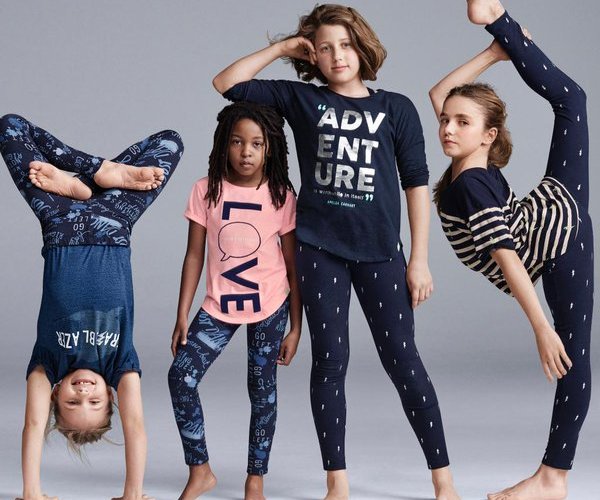
 Le Petit Cirque, an all-girls pre-teen dance group, was featured in various fun, acrobatic poses. What was supposed to be a cute and empowering message promoting Gap’s athletic ware for kids instead drew backlash when in one image the only black girl featured was used as an “armrest” by an older troupe member, who yes, is white. From offensive examples of the ways in which black women and girls are undermined and dehumanized in the media to others arguing that the response to the ad is a wild over-exaggeration – there was lots to consider in between those two reactions.

 My reaction? As a mixed, Jamaican, queer woman who works in media and LOVES to call out the lack of diversity in any situation, I found the pose to be pretty harmless and thought it’s a shame these four little girls are caught up in the crosshairs. After reading the Refinery article Al sent, I took a closer look. First, I would ask people to look at Gap’s history of promoting their kids athletic line.
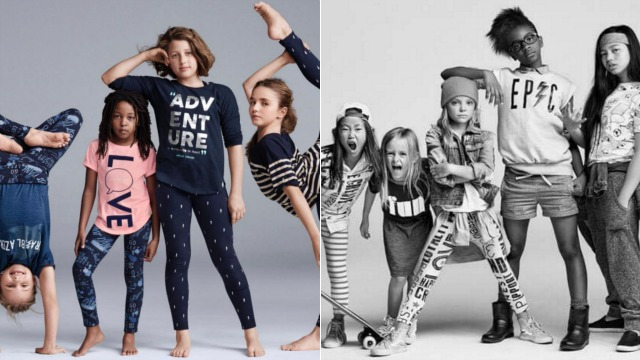
 gap-kids-ad_1459985514148_1156668_ver1.0_640_360.jpg

2016 Gap Ad Campaign                                                                    2015 Gap Ad Campaign

Gap’s 2015 ad campaign pretty much mimic’s the 2016 campaign but the roles are reversed. Does this picture make the 2016 campaign okay though? When there’s so few powerful and positive representations of black women and girls in media (yes, things are getting better, all hail Beyoncé and Shonda Rhimes), it’s unsurprising to me that the photo would touch a nerve. I’m lucky to work and live in an environment where I don’t experience racism overtly. For those people who aren’t as lucky as I am, I can see how -when looking at the 2016 campaign picture and even watching the Gap videos – I’d question the intention or message it’s sending. I also understand the “wild over-exaggeration” argument when there’s so many other problems that could be seen as more important.

At the end of the day, it’s a complicated issue and one that will come up time and again and lead to debates over the representation of people of colour whether in film (#oscarssowhite), television, advertising, sports, etc.. Are more people of colour needed in positions of power in media and advertising? OF COURSE. Will that change debates like this happening? Here’s to hoping.

 ———————–

Part 2: 

I wanted to let my wife speak first; letting people speak for themselves and being willing to listen are a few of the things that help dialogues unfold about equity. That being said, I penned my own thoughts before hearing hers, wanting to get an unfiltered perspective.

Question: How far is too far?

I recognize, even as I write this, that what I am asking will be/may be met with skepticism.

Whenever you feel the need to preface something with ‘my wife is black/my friends are black’ or to list your own marginal identity, like it’s a pass to get into the equity conversation, you’re probably walking on thin ice. That being said, I feel like if we aren’t able to have conversations about race, including diverse opinions, and considering each others’ perspectives, we aren’t really going to make progress. Ever.

You can’t solve racism by convincing marginalized people that racism has a negative impact on them; you need to convince an ignorant majority that racism is real and has pervasive, negative effects, even when it’s not intentional. Becoming more aware is a potential step to stopping inadvertent, latent racism.

I often get into these discussions with my wife and find that sometimes we’re not on the same page. I have an academic background in equity studies and am a louder person, comparatively. I go with my gut, but also try to consider all the potential interpretations. I can, admittedly, be somewhat detached in my dissection of issues when I go into ‘analysis’ mode; this is a strange contrast to my bleeding-heart, empathetic side. I feel everything, but I’m critical of my own emotional responses, because I know they are subjective.

Are these Gap images ‘offensive’ and are they ‘racist’? The answer might be different depending on these two terms.

At any rate, the most important thing is to recognize that if someone feels that something is racist –  it’s racist. Maybe not blatantly, or intentionally, but impact is more important than intention. I may not mean to hurt someone, but if I do it, amends need to be made.

When we are creating media and representing race, what is permissible? How can we avoid an accusation of bias or unintentionally negative messaging, even when well- intentioned ?

These ads could definitely be argued as ‘racist’. But someone could also argue that sitting on the couch with my wife watching Netflix, feet stretched out across her lap, is also racist. Except we love and respect each other. Does that matter?

At what point is our own baggage and experience, subjectively and culturally, going to shape our view of things? Is it fair for us to load all of our negative and positive connotations onto and attribute our views to a creative team we’ve never met?

One Tweet read: “This is why it’s important to have diversity behind the scene for marketing projects. @GapKids

If the assumption is that the creators should have ‘considered the impact on black girls’ … what do we actually know about the real model in this shot, or the team who created the image? If we assume that the team who created the ad has no diversity on it, aren’t we presuming that no women of colour are not represented behind the scenes, when it’s entirely possible that a diverse group saw this (and the other pictures) thought, “goodness, these girls look strong and confident and capable and adorable.” Job well done!

Are we actually disempowering the very subject we are seeking to liberate by assuming she should feel ‘less than’ based simply on one, of many, poses in an ad campaign? I wonder, how these young girls will/do feel about being featured in an ad campaign that aims to celebrate their female talent and awesomeness … and instead they have singled out one member, based on her race, insinuating that she is not wholly part of the team, that one pose causes the world to see her as separate from her troupe-mates, foisting society’s biases onto her, when for all we know they have an amazingly supportive camaraderie and mutual respect. There are many ways to interpret the pose and one might be that the ‘rock’ of this group, small but mighty, is the girl in the ‘love’ t-shirt. She is central to the group and stares down the camera. Why do we assume that the pre-teen in the pose beside her must be ‘dominating’ or subjugating her? To read into the pose without the models’ consent and without allowing them to have a voice is, perhaps, disrespectful; revealing more about US than them. Or maybe I’m just being naive. We have superimposed power relationships onto what may be perfectly harmonious relationships.

Is our take on the image more harmful to this young girl than the pose itself? It’s one thing to say it “could” be taken this way, it’s another to say it  is this way. 

Our interpretation of an image, like Oscar Wilde argues, may have more to do with us and our views than the image-maker; the artist reveals the spectator, Wilde claims, more so than the artist. If we consider the power of the viewer to interpret an image, is there any image that includes multiple figures that is not, in some way, about power or an interpretation of it?

For example, you can make a case for pretty much any image: Below you have an image of two friends, cheerfully playing around…or is this an insidious image with a subtext about one woman’s need to be carried by her peer because (we argue) she is incapable of getting there on her own two feet?

images.jpg

Remember, this debate was sparked by: This article.
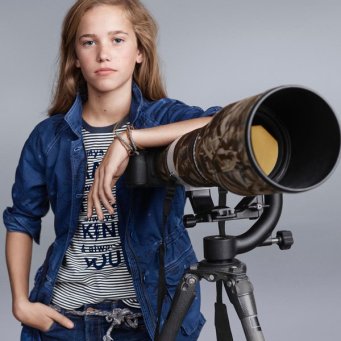
CfDlMh4UIAAYYRQ.jpg

Tagline: “meet the kids who are proving that girls can do anything. check out :

If this image (above) featured a gorgeous black model, perhaps we might claim that she is being put behind the lens/telescope because space in front of the camera is still being withheld from her. She will only have a supporting role. Which is often, sadly, unfairly the case. But not necessarily in THIS example.

Ellen Degeneres is, I’d argue, one of the nicest, most inclusive white ladies on the planet. She celebrates the small and large victories of icons and underdogs, laughing at herself and using her celebrity (hard won after facing her own public battle for acceptance for her own marginalized identity) to make space for others who deserve a chance to shine. I’m not saying she ‘can’t’ be racist; but must she be, simply by virtue of her skin colour? Looking at the pattern of behaviour, context, awareness and track record may help to illuminate whether this should bother us, even if it ‘could’.

Let’s take a few more examples, just to belabour the point: maybe the only safe way to photograph a subject is in isolation? But there is also a claim that isolation itself is ostracizing. Here, the child is being singled out. Left out. Put to the margins. Or worse, we’re preparing him for super-racist, police profiling and replicating a toddler-version of a mug shot. This adorable kid deserves better than the worst possible stereotypes. Offering this kid just one option of how we interpret him is a huge injustice. It reminds me of “The Danger of A Single Story.”  (watch an amazing speaker and author sum it up!)
 

download (1).jpg

black-child-school.jpg

If someone is faced forward, it’s a mug shot. If someone is getting a piggy back ride,  it might be implying that they require a leg-up to succeed. lukensia-piggyback.jpg

Maybe it’s a manifestation of the white saviour complex. This is a real thing. But real here?
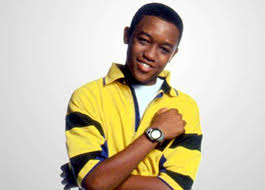
images (1).jpg

Is this a great shot of a good looking kid, or a stereotype about athletic ability and an affinity for time-pieces? Below, is a comment on … who knows what? Images speak a thousand words, but what if we’re only focused on the negative ones?

images (2).jpg

In the image below, she is facing away from the camera, because she is faceless and not deserving of attention. Or because… she is doing a cartwheel. Rather than focus on her talent, we are adding a lens to the image that presumes bias and intent. These are not Mapplethorpe images, deliberately infused with salacious power-commentaries. They are cute pictures of cute kids. Hopefully these youngsters haven’t experienced the horrible things, to the same degree, that many of the adults of our world have.
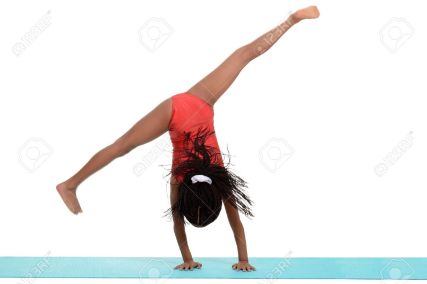
15282730-Young-black-girl-doing-gymnastics-cartwheel-motion-blur-Stock-Photo.jpg

That’s why I wonder what these conversations do to the subjects we are discussing; we’ve taught the girl in the photo that people will see her skin colour first and foremost, not her ability. That it won’t matter how talented and accomplished she is… even when that’s what the campaign is about. If this is true, it breaks my heart. Because I feel like I’m lying when I tell my students that they can accomplish anything and everything they dream about and that the world is getting better and that together, through alliances and critical discourse, they can repair this damaged world and make space for each other to reach their potential. Regardless of who they are, they can acknowledge their privilege and extend a hand to help others rise with them; make a bigger pie, so we can all get a piece.

How can we do better? I’m not, never, advocating for ‘forgetting’ the past. But how can we move forward when even good things, intentionally good, can be bad? If we villainize our champions, who will we have left? The relentless actual villains? But it’s not about not hurting white people’s feelings.

When will a beautiful, diverse group of models, expressing a positive message for gender equality and empowerment, be allowed to pose as they’d like, when EVERY pose could be unpacked and made malicious? When will we get to a point where people are hired based on merit? When will I not worry that people think my identity, my family and marriage are revolting? When will places and spaces be accessible and inclusive, by default?

One tweet said:

” @GapKids proving girls can do anything… unless she’s Black. Then all she can do is bear the weight of White girls.  ”

If, in the case of these young models, it’s hurting the young girls who may see these images, I have to ask: How much of what we perceive is really ‘damaging’ as opposed to being a reflection of damage already done? We are perpetuating a victimhood that is not necessarily felt by that young woman. As a viewer, this doesn’t negate YOUR feeling, but it doesn’t mean that she should be viewed in this way. She’s not a prop. She is a person.

This narrow focus doesn’t, I worry, contribute to real discussions that promote insight and progress. It makes me angry to imagine that my future children’s image will be decided by others. I’m not ignorant to the systemic issues, but I don’t choose to see a marginal position as powerless.

Most recklessly, I’d like to ask if attacking an ad with such possibility to be read as positive and empowering actually does harm to other, more obvious instances of racism? Does it deflect attention from the urgent, life-changing work that needs to continue gaining attention and traction? Does it make people recoil from efforts to do anti-racist work?

I humbly, openly ask you to tell me your thoughts. Teach me. Help me to understand. See my willingness to learn and to question. Be gentle with me, not to spare my feelings, but to leave me some energy to keep going and growing, to help move this forward. The most important person is my life is a black woman. The most important future people in my life are my own children. I am an ally and am happy to add my clout to the fight, knowing that I’m part of the problem, but also eager to be part of the solution. 

Here’s what the company has to say:

“The retailer announced on Monday that the image (one of numerous shots featured in the campaign) would be replaced in response to the deluge of critical feedback.

Le Petite Cirque’s founder, Nathalie Yves Gaulthier, released a statement on Facebook today about the situation. “The child in the ad is not an ‘armrest,’ she’s the other girl’s little sister, they are a very close family,” Gaulthier writes. “The child is a very young Jr member with Le Petite Cirque, a humanitarian cirque company, and therefore a wee shier than the more seasoned older, outgoing girls. Our company is deeply saddened by some people misconstruing this as racist.” Gaulthier also voiced her support of Gap Kids and DeGeneres in the post.

“As a brand with a proud 46-year history of championing diversity and inclusivity, we appreciate the conversation that has taken place and are sorry to anyone we’ve offended,” a Gap spokeswoman said in a statement, according to ABC News. “This GapKids campaign highlights true stories of talented girls who are celebrating creative self-expression and sharing their messages of empowerment. We are replacing the image with a different shot from the campaign, which encourages girls (and boys) everywhere to be themselves and feel pride in what makes them unique.”

Repost: An open letter to Donald Trump

Open Letters

Hey Donald! Or should I call you President Trump? It certainly has a magnificent ring to it. Magnificent, obviously, in the way that a tornado heading for a redneck trailer park in, say, Texas, is magnificent. On second thoughts, president is not a powerful enough designation for a man of your caliber. In the parlance […]

https://bentrovatowhippingboy.wordpress.com/2016/02/15/an-open-letter-to-donald-trump/

Your Blood is so… Gay.

Open Letters

The Canadian Blood Services’ page asks: “Pop Quiz! What type of blood is the universal donor and is always in high demand?”

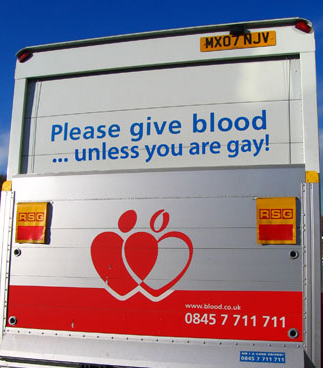
Answer: O negative. That’s me. Too bad I won’t be giving blood until gay men are removed from the banned donor list. This policy is in need of a serious update. We’ve learned so much since the ‘gay panic’ of the 80s. Haven’t we? This continues to promote negative stereotypes about the LGBTQ community. Saying you’re not discriminating against a sexual orientation (just men who have slept with men in the last five years) is the biggest equity dodge I’ve heard lately.

Sent an email, via a colleague, to the Blood Services Rep before they do a drive at my school. Still the same ridiculously evasive answer:

The rep wrote, “[I believe she] is referring to the Canadian Blood Services MSM Policy (men who have sex with men in the past 5 years are not eligible to donate). This policy does not discriminate against sexual orientation, rather ensures we have a safe blood supply for the vulnerable patients we serve.

All of this information can be accessed at http://www.blood.ca. ”

“Blood. It’s in you to give.”

Guess what? It IS in me to give. And I care about this. I want to give; but what I also give a crap about is basic, non-discriminatory policies in a country like Canada – that self-identifies as a global leader in equity. Why are we preventing healthy, generous men (who happen to be gay) from helping to save a life? Because we use words like “vulnerable” as scare tactics to insinuate that gay blood belongs to promiscuous, unprotected, reckless … people… who are just as likely as anyone who doesn’t know every detail of their past/partners/partners’ past as anyone else.

a_2012_bloodban_h.jpg

The rep’s reply is the same ‘we aren’t discriminating’ crap that they’ve always offered. It rests squarely on the assumption that gay sex, which implicates someone on the basis of “orientation” (unless they are celibate) is somehow dirtier or more ‘risky’, therefore likely to put the ‘vulnerable’ blood recipients at more risk than other people who have sex without condoms or safer sexual practices. * Just so we’re clear. You CAN be gay and donate, as long as you haven’t had sex with a man in 5 years. If, on the other hand, you are a gay man who isn’t actively refraining from having a sex life, your orientation DOES preclude you from donating. So their ‘orientation’ loophole is a gaping black hole of carefully worded b.s.

If someone (anyone) is sleeping with anyone, they may be at risk of having an STI. Yes, gay men in the 80s were hit hard by HIV/AIDS (which we well know) and as a result, their population/community actually tends to be MORE informed and often safer, as a result, than your average sexually active person. But I dare you to find the latest stats on the highest rates of STI transmission. I’m going to bet (I would actually put real money on this) that it’s not gay men who are contracting the most new STIs. So, let’s not be naive (or a bigot): essentially, every person who doesn’t know every detail of every partner’s past, every monogamous partner who has unknowingly been cheated on, every one night stand, every broken condom, or forgotten one, makes someone just as likely to be ‘unsafe’ – sexual orientation aside.

I’m really disappointed by the answer I got. Because I thought our new Prime Minister, Mr. Trudeau, had JUST issued directives to help end this policy. There is even a link to the Petition to end this ban.

Maybe our GSA members will want to protest the blood drive. Just kidding. Sort of. But I’m glad I asked. Never a fun question; always an interesting answer.

As a final thought: When this policy does end, I’ll throw a vampire-themed party and let them pump all my veins to within an inch of my life.

#CanadianBloodServices(used to)suck

#onegativebloodstrike

#bloodbandiscrimination #canadianbloodservice #equityplease

For more on this… check out the ever-reliable wikipedia Here

gay-blood-ban.jpg

#Best and Worst Oscars… Coverage

Open Letters, style
88th Annual Academy Awards - Arrivals

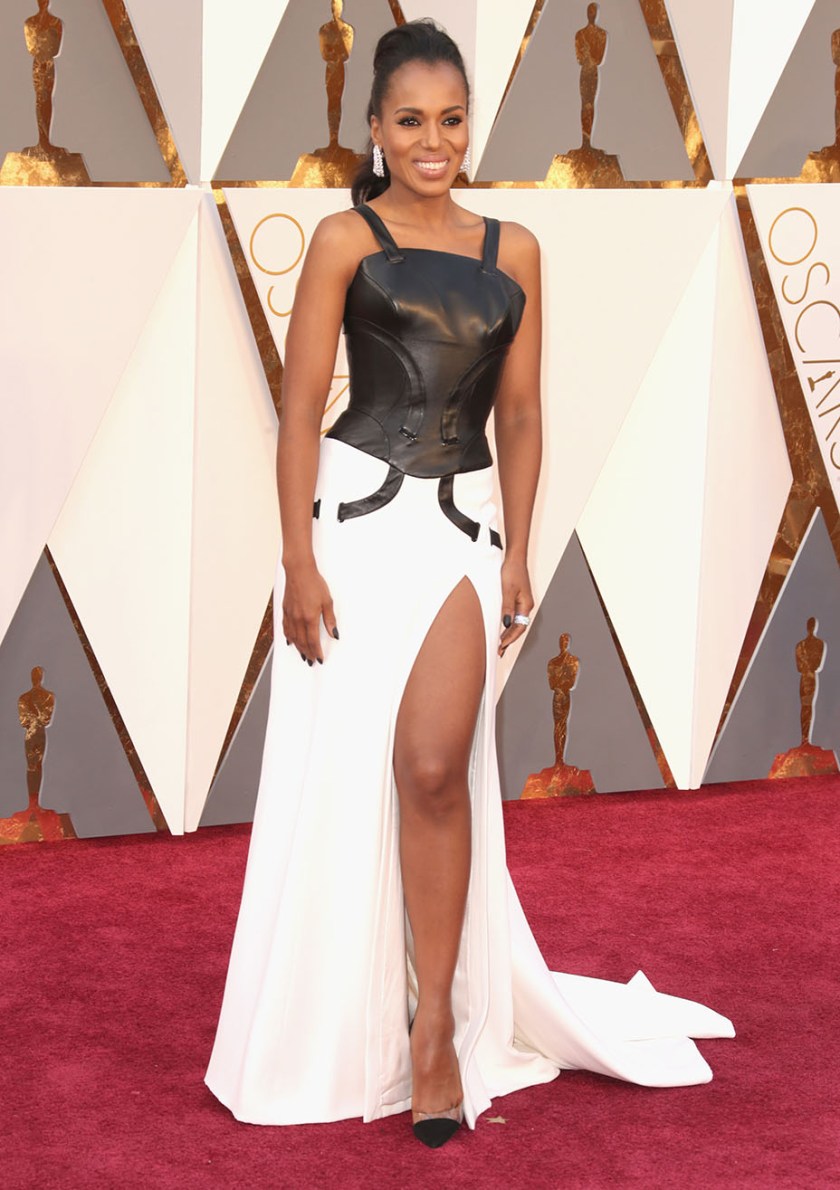
HOLLYWOOD, CA – FEBRUARY 28: Actress Kerry Washington attends the 88th Annual Academy Awards at Hollywood & Highland Center on February 28, 2016 in Hollywood, California. (Photo by Todd Williamson/Getty Images)

Is it 2016? I can’t tell. Why? Magazines like Flare Magazine and Elle Canada are still putting out embarrassingly antiquated trash articles like ‘Best and Worst Dressed’ Oscars lists. Really? Why not just stick with praising the ones you liked rather than shaming and bullying people whose dresses (and bodies) you feel like publicly critiquing? How can a magazine simultaneously publish articles on feminism, while also churning out this garbage, and think that no one will notice? You can do better.

Flare’s Best and Worst List and

Elle’s Best and Worst List

We talk so much about modern womanhood, about gender, about anti-bullying, about focusing on a person’s talent and contributions rather than his/her appearance; we’ve heard the years and years of inane ‘what are you wearing?’ questions, posed almost exclusively to female athletes, actresses, celebs, and heard the, ‘wow, she really bounced back after all that baby-weight’ comments, and we’ve started (thank  God) to notice that it’s not merely sexist to focus on a woman’s body in lieu of her talent (at an AWARDS show), it’s also just mean-spirited. And sometimes racist, classist, sizeist and… still mean-spirited.

There are very few other situations where a person’s unsolicited, unwelcome comments about a person’s appearance wouldn’t be called out. More on that later.

No woman at the Oscars picked (or had a stylist pick) her dress and thought, ‘Fuck it, I look like crap, but this will do.’

It isn’t even an excuse to say, ‘but Heidi Klum looked radiant, despite an iffy choice on that dress’. If we think she looked great… great. Why veer into the salacious territory of commenting on the things we don’t like about someone when it is NOT relevant to the event.

You wouldn’t walk up to your neighbour to compliment her on her beautiful landscaping and casually toss in, ‘but you sure do have a fat ass’.

You wouldn’t go to a high school graduation and watch an accomplished young woman cross the stage to give her valedictory address and say, ‘too bad she has teen acne, how will she ever succeed with only her brains and winning personality?’

You would never go to someone’s wedding, to celebrate their love, and say, ‘everyone looked so amazing and gave touching speeches as a testament to your beautiful relationship… except your ugly cousin, whose ill-fitting dress was a shade that no red-head should wear.

Or worse, congrats on your wedding, engagement, birth of your child, promotion… shame about ‘your ugly spouse, your tacky ring, old-man-wrinkled raisin-baby, ugly footwear.’ We just wouldn’t.

But it’s commonplace to devote entire magazine spreads and tv spots to publicly judging things that are beside the point. And I don’t want to hear the ‘well, as celebrities part of their job is to be judged.’

Yes, that is a side-effect of being a celebrity. But no one invites public bashing. Nor is it okay. That’s, on some level, like saying that being a woman invites sexual harassment. Yes, it happens. But it isn’t okay. Something being common-place doesn’t make it right, or progressive.

Just ask Rebecca Black’s mother, who had to watch her teen daughter’s ‘haters’ post comments like, ‘You should kill yourself,’ because she had the nerve to post a video of herself singing (like everyone was watching). And some people didn’t like it. And the adults in her life supported her ambition. And the world replied. Sadly, I heard actual teens defend her crucifixion, saying that ‘she should have known that if she posted something online, people would tear her apart.’ This ‘she brought it on herself’ kind of attitude is so regressive and … frankly, terrifying. If media permits, and encourages, us to eschew kindness and courtesy (in favour of the kind of brutal honesty that get someone fired or slapped in the real world), is it any wonder that we are dealing more than ever with online bullying and a crisis of self-esteem. Fashion has become a gladiator sport, and the contenders are seemingly willing participants with no way out of this gauntlet.

When it comes to the Oscars, people spend huge amounts and hire experts to make sure their look will get them the right kind of attention: the kind where people either leave them alone, or give them a pat on the back for having escaped the vicious, catty humiliation of being targeted by ‘style watchers’ for daring to wear something that didn’t strike the right note with a particular person. Are we okay with a best-case-scenario where someone feels lucky to be praised for picking the right dress and shoes and favourably showcasing their body… when the alternative is being torn to shreds?

Nowhere else would this be acceptable.

So to those magazines, I’ll respond:

“Unsubscribe”… seriously. #shameonFlareMagazine #growupElleCanada #givemesomefashionmediawithoutthebullyingandbs Flare Magazine ELLE Canada​

P.S. Kerry Washington, you make me want to be strong and fragile and badass and professional and sexy and clever. And yes, I like your outfits, but that’s beside the point.

Carol / Do I Sound Gay?

Love, Open Letters

While the rest of the Western world was at a screening of the new Star Wars film, I was hearing parts of the film’s sound fx leak through the wall, while watching the film Carol. To round out the day, I also watched the documentary, Do I Sound Gay? 

Carol-Poster.jpg

Photo Credit

For different reasons, each film really brought out an unexpected revelation about their shared subject matter, queerness, and had me thinking deeply about a thing I feel (and have felt for most of my life) that I’ve got a pretty good grasp on.

I’ve been gay (consciously) for half my lifetime. Coming out, as I did, at 16-years-old, means I’ve had lots of time to think about it. Sometimes, honestly, I’m surprised by what I still don’t know. Or haven’t considered.

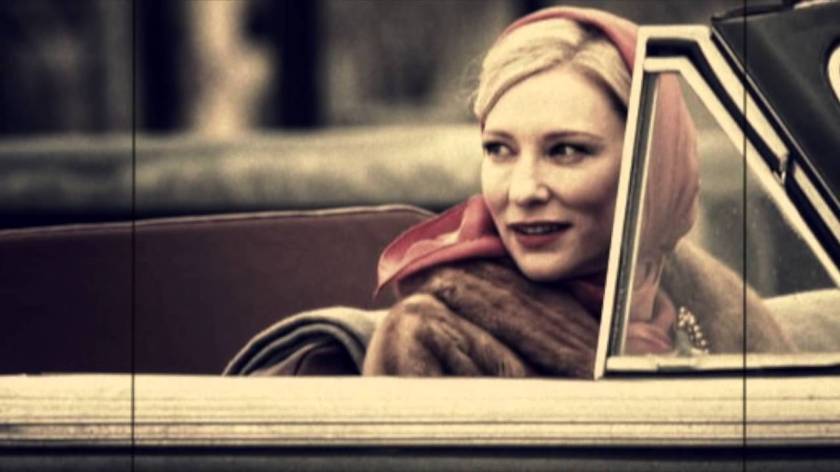
At Carol, a beautiful film set in the 1950’s, the story centers on two unlikely heroines, and their relationship; the film is spare and haunting. The sole love scene unfolds three-quarters of the way into the movie and is shot with reserve. This was interesting for several reasons. Leave aside that the movie’s leads, Cate Blanchett and Rooney Mara, do an incredible job, conveying the nuances of restraint, fascination, heartbreak and desire, and that the film is up for numerous awards. It’s one of several films out right now (including The Danish Girl, About Ray), that tell the stories of lgbt lives. Despite the trailer that makes it pretty obvious that this is a gay romance (but also a human one), a man got up, amidst grumbles, dragging his wife with him, and loudly protested, “I’m not going to watch this!?!” as soon as a woman’s clothes came off… and she didn’t take them off in order to be the receptacle for some man’s desire or hard appendage.

maxresdefault.jpg

Photo Credit

Interesting; for once (one time too many, apparently) he had to suspend HIS disbelief and imagine a story that is not designed to reflect his desires; like every queer person who watches a love scene, that does not show their own situation, and still manages to empathize, to have their heart quicken, tears brim their eyes and to feel tenderly towards imagined lives that share the human experiences of love, loss and longing. How many thousands of relationships do we witness and respond to? How many of those are like our own? A mirror to our heart and mind.

So, that happened. One couple walked out. But for many of the rest of us, we watched as something familiar to us unfolded on screen: the closing of space. The moment between two bodies that is transformational. I would wager that every gay person has traversed a great distance, mentally or emotionally, when they took the first steps to close the gap between who they have been and who they are. 

For Rooney Mara, it is the slow motion walk, across a crowded room, where she walked towards the conscious decision to become something else, leaving her old life behind.

I remember that moment, and how conscious it was to cross the distance, weighing the choice to own each step, mind racing as my body moved, knowing that I was changing myself forever, in my own mind and the mind of everyone I cared about… and had never met. I looked at her, and saw the expanse of kitchen tiles stretched out between us, each one impossibly far away from the next, black and white. The kitchen of my host family, in Brazil, at sixteen. She, leaning against the counter, drinking glass after glass of water, stalling. She made me take those steps, alone, coaxing me with her voice, small talk, fully aware of the trajectory of my body and mind; later she told me she didn’t want to be ‘something that happened to me’. She wanted us to be consciously chosen. I remember it all.

The friend who saw the film with us last night joked that she ran across that space. She knew, wholeheartedly, where and to whom she was going. Some spend years circling it. Choosing to change forever – – even if you have known (forever) that you are not what you seem, or that you are…and that everything after this moment will confirm it. Some would argue that it isn’t a change at all – you are who you are. But how many of us have to make a conscious break from the script, read to you and confirmed by everything visible and invisible in your life? You choose to stop lying. To become true. You choose to diverge from the path everyone takes for granted.

The man in the theatre was so sure of that path that he didn’t think it was reasonable that he hadn’t been warned, explicitly, about the detour.

And once we get to the other side – recognizing, to ourselves, our friends, our family, our communities… who we are (sometimes in varying orders and in varying degrees), we have crossed infinite space.

Yes, we all have firsts. But how many share a communal, cultural memory of a (sometimes painful, sometimes terrifying) first step to belonging that is not part of the story we have all grown up believing we will live?

Do-I-Sound-Gay1-848x500.jpg

Photo Credit

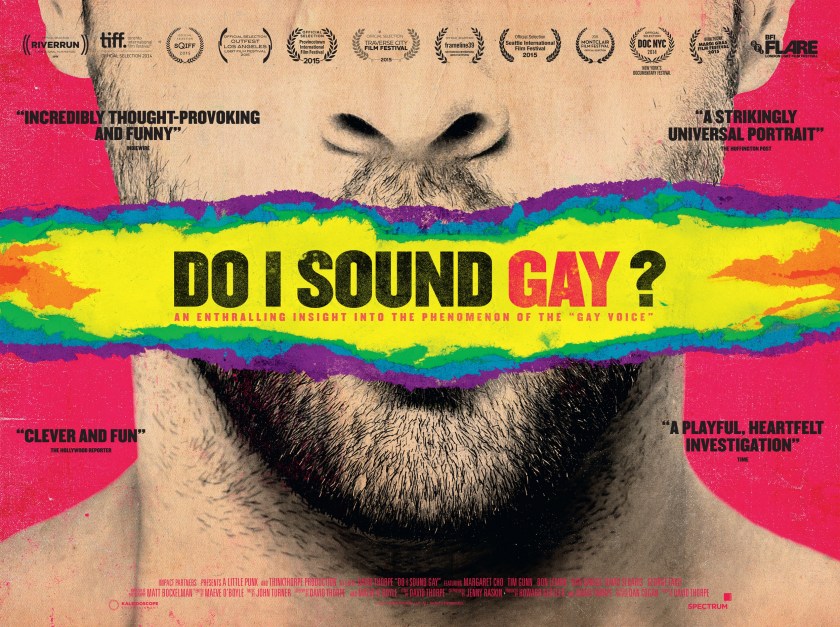
Which brings me to the next film: Do I Sound Gay? where a documentarian explores the fascination and self-loathing surrounding his voice and its gayness. He asks questions (ones I’ve heard asked so many times) about whether gayness is really a thing, vocally, and why, if it is, there are such strong feelings about it. Is it natural, nurtured? When it is involuntary, how does it impact the person who becomes part of a stereotype that is larger than themself?

Two questions stand out: why do I care if I sound gay? Why am I happy when someone can’t tell I’m gay? I honestly want to know. For queer women, I think, it’s different. We don’t have an audible stereotype. But I can identify with the strange, mystifying pride at being unidentifiable as a ‘gay person’. What does it say about me that I am happy to pass?

do_i_sound_gay_ver2_xxlg.jpg

Photo Credit

Partly, it means that I can self-define and exist more fluidly, bound only by the rigorous cultural expectations of my gender. Partly, I like playing with and breaking down the stereotype from the inside. We all know what the stereotypes entail, even if we feel that they are mostly ghostly, outdated ‘types’that really describe no one in particular… If I did embody the stereotype, I’d cry. There is some shame. And pride at having escaped a laughable cliche. And then there is privilege. I am aware that, in passing, I have it. It gives me the ability to move between groups, unseen, and to use my words to shape perceptions of myself… and my people. Wink wink.

In sixteen years I have never felt ashamed of who I am, not for my gayness. But I have interesting queries about what our identities and aversions mean for us, individually and as a group. It’s the perfect lead-in to a New Year to embrace some introspection. So I ask: do I sound gay?

DISG_Toronto_Vertical-Poster_FINAL_poster_580-600x400

Photo Credit

Double Double Trouble

Open Letters

It’s really sad to me that people (grown up people, I assume) fall into the ‘let’s insult the police’ trap, complete with donut cliches, as soon as they read an article they disagree with.

The headline reads: A simple coffee run got this Canadian into some hot water with the police.

Tim Horton drive-thru text nets $287 fine

A.J. Daoust was issued distracted driving ticket during his morning coffee run

For more on the article, read the full version here.

Basically, it proceeds to set him up as the victim. The CBC post is deliberately written to polarize people, offering none of the perspective of the officer. Bottom line: texting or talking on your phone while driving is illegal. If you do it, you’re breaking the law. Period. There are hands free options. A car is an enormous machine capable of killing or injuring people, and damaging property, if you can’t be an adult and resist answering a text… don’t drive. And stop blaming the police for cracking down on something that’s becoming the number one way that pedestrians are killed or injured, and is a leading cause of collisions. Monitor your own behaviour and the police won’t need to.

I expressed these thoughts and was surprised to see a friend, an old pal from grade school, chime in with an angry sounding post about ‘wasted tax-payer dollars/abuse of power/overreaching and general exasperation about the ‘in a drive-thru’ part of the scenario.

An eloquent friend replied to both our posts, writing:

“Alison said it polarized people on the debate. This “news” takes an isolated incident and blacklists all police – so the news reporting is ridiculously anecdotal and prejudicial. I agree – stop sucking in this news and thinking that police shouldn’t ticket people who are on their phones while driving-not the drive-through, but everybody who’s driving and texting. One of the most justified use of taxpayers’ money is to endeavour to stop people using their phones while driving!”

And, as with most open-letter-worthy subject matter, I couldn’t bite my tongue and rounded out my initial impression, after reading a follow-up article. Because anyone with any sense knows there had to be another side to this. And neither can be called ‘fact’ because we can’t possibly know what actually happened.

But as a final thought, consider: Many drive thrus have pedestrian traffic to access the storefront. Many parking lots have high rates of collision. If it’s illegal… it’s illegal. If your car is parked, not moving, go for it and check your phone, or use hands-free. It’s a privilege, not a right. If a police officer enforces a law when they see it, it’s still the law whether or not they are set up in a speed trap, or see someone driving 70 km/hr in a parking lot. Reckless behaviour or illegal behaviour is still illegal even if the person didn’t think THEY were the worst offender. Partly, I guess this is a matter of whether you feel the laws are ‘flexible’… Not to be flippant, but we don’t charge people with sortof breaking and entering, or kinda abusing an animal. As a teacher I definitely see the problems with ‘professional judgement’ as a way to determine if something should be acted upon; but, in my own experience, the way a person responds to my polite, but firm, reminder of how we ought to behave (for example) according to our code of conduct, hugely determines whether it escalates or goes on to include a formal warning/discipline. In the case of the officer, I don’t know what happened, because I wasn’t there. But I do find it very interesting how strongly people adhere to stereotypes and superficial judgements about what/who is right in situations such as these. Scroll through the comments to hear how many peoples’ ‘hatred of police’ is really doing the talking. That, again, is deeply impacted by our own experiences – with class, gender, race, … and donuts.

Gold Star: Awards Gala

Open Letters, style
Gold Star: Awards Gala
Tomorrow night marks the one year anniversary of my first award as a Teacher. Last fall I received the Harmony Educator Award, a provincial award that recognizes contributions to improving our schools and advocating for inclusion, equity and celebrations of diversity. I was the individual recipient, while Jer Dias of Jer’s Vision was awarded the prize for corporate activism or an organization that improves the lives of young people, with a particular focus on equity. It was one of my proudest moments. 

This year, the Harmony Movement will honour a new batch of individuals and professionals. 

So when the invite says Gala … A public employee knows that means – look like you made an effort – but definitely know that the most important part of the night is about honouring the ideas and celebrating the words that are a source of change and inspiration. Especially when those ideas and words find their way into action. 
Things are Getting Better. 

Confessions

Open Letters

I have a few things I need to admit; secret confessions, if you will…

  1. I use Facebook’s Birthday reminders as a cue to delete people as friends. Instead of going and wishing a happy birthday to them, if I don’t really remember who they are, or accepted a friendship from someone I haven’t spoken to in ages… I just click delete. Sometimes if I feel a little bad about it, I wish them Happy Birthday… then delete them.

2. I get more than usually bothered by people littering and small acts that go against rules people should know… like line-hopping, stealing shopping carts, playing games on your phone at full volume while in public, and people swearing in public where families with children or those who don’t feel like listening to cursing are likely to hear them. There is currently a shopping cart sitting on the curb outside my house. I feel a deep rage each time I drive by it. I fantasize about one day catching these culprits and publicly shaming them, or creating a piece of protest art from the abandoned cart.

3. I love my neighbours, but hate that they have Christmas decorations up from last year, and their yard/front stoop is strewn with no less than twenty-five children’s toys (cars, bikes, hula hoops, buckets), pieces of lawn furniture, fake potted plants, Easter wreaths, shoe racks… seriously. I dream of ways to preserve my sweet relationship with them, while also eliminating the junk pile that is visible every time I go to my own front door.

What irks you? What do you think about that makes you feel just a teensy bit guilty?